04System type

Commercial weatherproofing & silicone sealing in New Jersey.

This scope covers perimeter sealant joints at storefront and curtain wall framing, weatherproofing at building envelope penetrations and transitions, and sealant remediation — full removal and re-caulking of aging systems on occupied buildings. Sealant is a maintenance item with a finite service life, so remediation is scoped as its own discipline: condition survey, joint preparation, access planning and adhesion testing, not a line item attached to new construction.

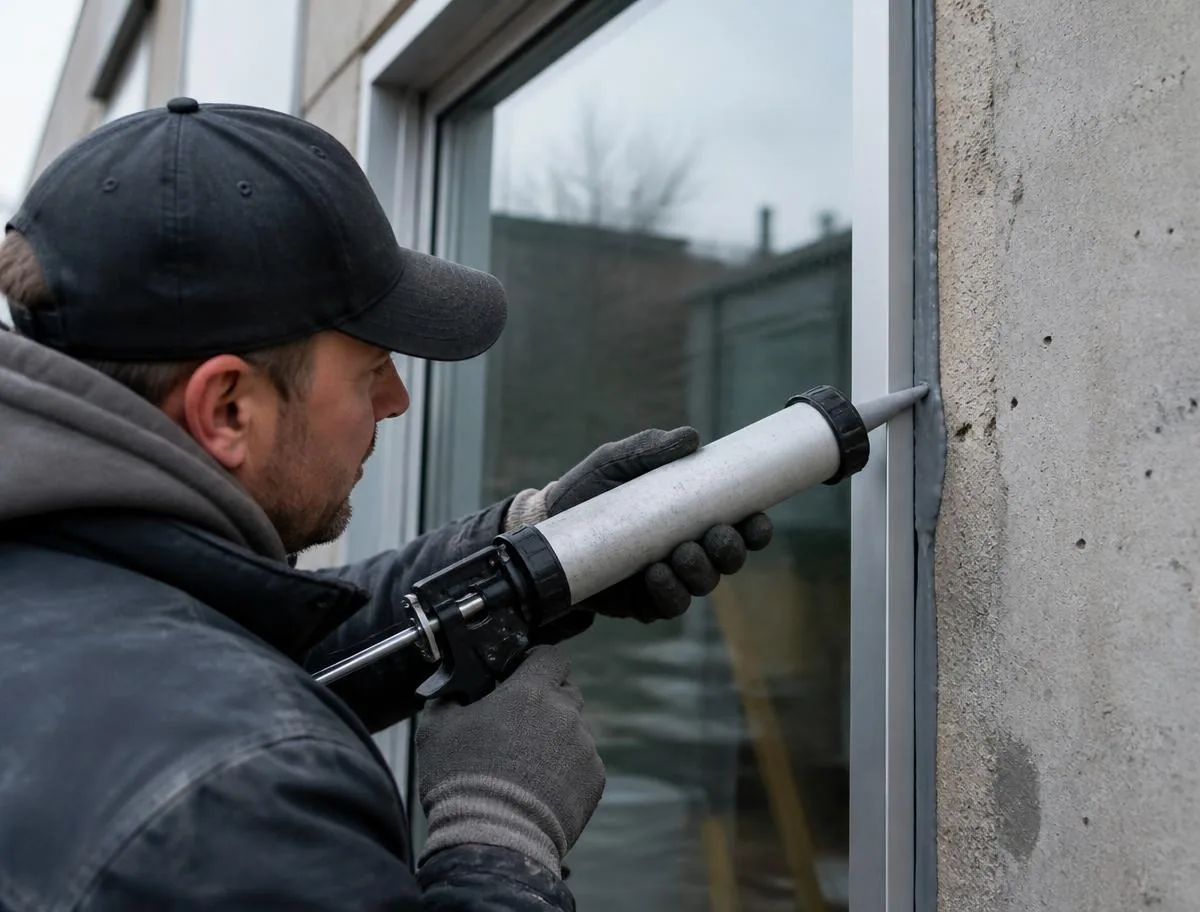
Glazier applying a bead of gray silicone sealant with a caulking gun into the perimeter joint between an aluminum frame and a concrete wall
Perimeter joint sealing at aluminum framing to concrete

Scope covered

Four distinct bodies of sealant work.

A

Perimeter sealant on new systems

Sealing storefront and curtain wall framing to the surrounding envelope as part of new installation: perimeter joints, transitions to air and water barriers, sill pans and penetration seals, tooled and inspected before the opening is closed out.

B

Envelope penetration weatherproofing

Sealing at louvers, conduit and pipe penetrations, sign anchors, expansion joints, coping and parapet transitions — the discrete locations where water reliably enters a building that otherwise reads as intact.

C

Remediation and re-caulking

Full removal and replacement on aging storefront, curtain wall and panelized facades: condition survey, joint re-sizing, primer and adhesion testing, staged access, and phased replacement across elevations on an occupied building.

D

Leak investigation and targeted repair

Where water entry is reported but the source is not obvious, the affected assembly is reviewed and, where warranted, water tested to isolate the path before any repair is priced — so the work addresses the actual entry point.

Failure

Why sealant fails, and why remediation is its own service.

Sealant is the shortest-lived component of a glazed facade. The glass, the aluminum and the anchors routinely outlast the joints between them by decades. Understanding the specific failure mode on a given elevation is what separates a repair that holds from one that debonds in three seasons.

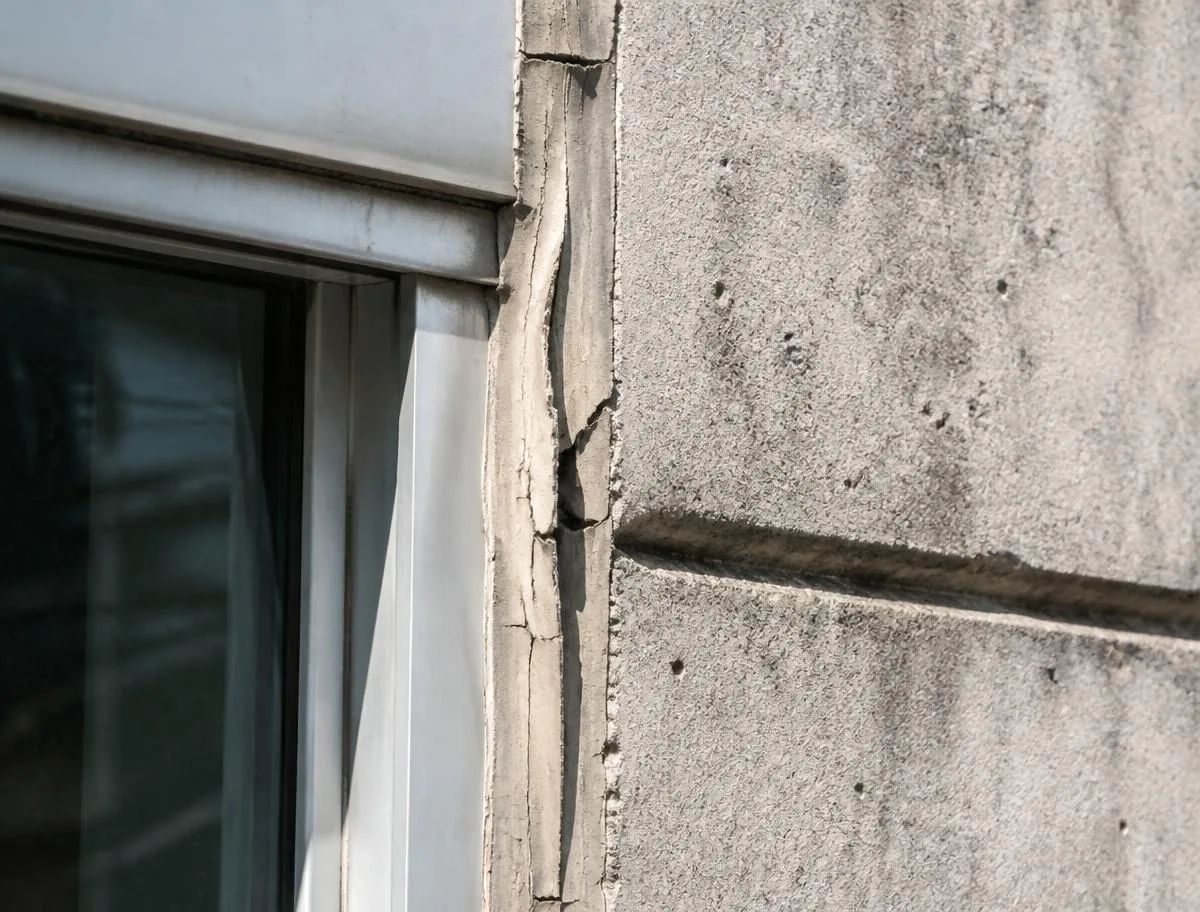
Cracked and split weathered sealant bead pulling away from an aluminum window frame and precast concrete facade
Cohesive split and adhesive peel on an aged perimeter joint
01

UV exposure and weathering

Ultraviolet radiation breaks down the polymer backbone of lower-grade sealants long before the building is due for any other facade work. The first visible signs are chalking, surface crazing and dirt pickup, followed by loss of elasticity. South and west elevations almost always degrade first, which is why a condition survey reads one elevation at a time rather than assuming the building fails uniformly.

02

Thermal cycling

Aluminum framing expands and contracts with every daily and seasonal temperature swing, and the joint the sealant occupies changes width continuously. Over thousands of cycles a sealant that has hardened, or one installed at the wrong width-to-depth ratio, loses the ability to return to shape. Cohesive splits down the middle of the bead and adhesive peel at one face are the two outcomes.

03

Joint movement and building movement

Structural deflection, live load, wind sway and settlement all move joints beyond what the original design accounted for when the joint was undersized. A sealant rated for ±25 percent movement in a joint that is actually moving 50 percent will fail regardless of product quality. Remediation frequently means re-cutting the joint to a workable width, not just replacing the bead.

04

Substrate and installation defects

Missing or incorrect primer, contaminated substrates, no backer rod, three-sided adhesion, or sealant applied over a marginal existing bead — these are installation failures that show up three to seven years later as adhesive loss. They cannot be corrected by adding more sealant on top; the joint has to be opened and rebuilt.

05

Chemical incompatibility

Silicone, urethane and hybrid sealants are not universally compatible with each other, with glazing gaskets, with setting blocks or with structural silicone. Applying an incompatible product causes staining, softening or bond loss. When existing sealant is unidentified, adhesion and compatibility testing on the actual substrates settles the question before a full-building order is placed.

06

Why remediation is its own service

Re-caulking an occupied building is not a subset of new construction. The work is access-driven, elevation by elevation, over a live building with tenants and pedestrians below. Existing sealant removal, substrate preparation, joint re-sizing, mock-ups, adhesion testing and staged phasing dominate the schedule — the new bead is the smallest part of the effort.

Execution

The joint detail and the access plan decide the result.

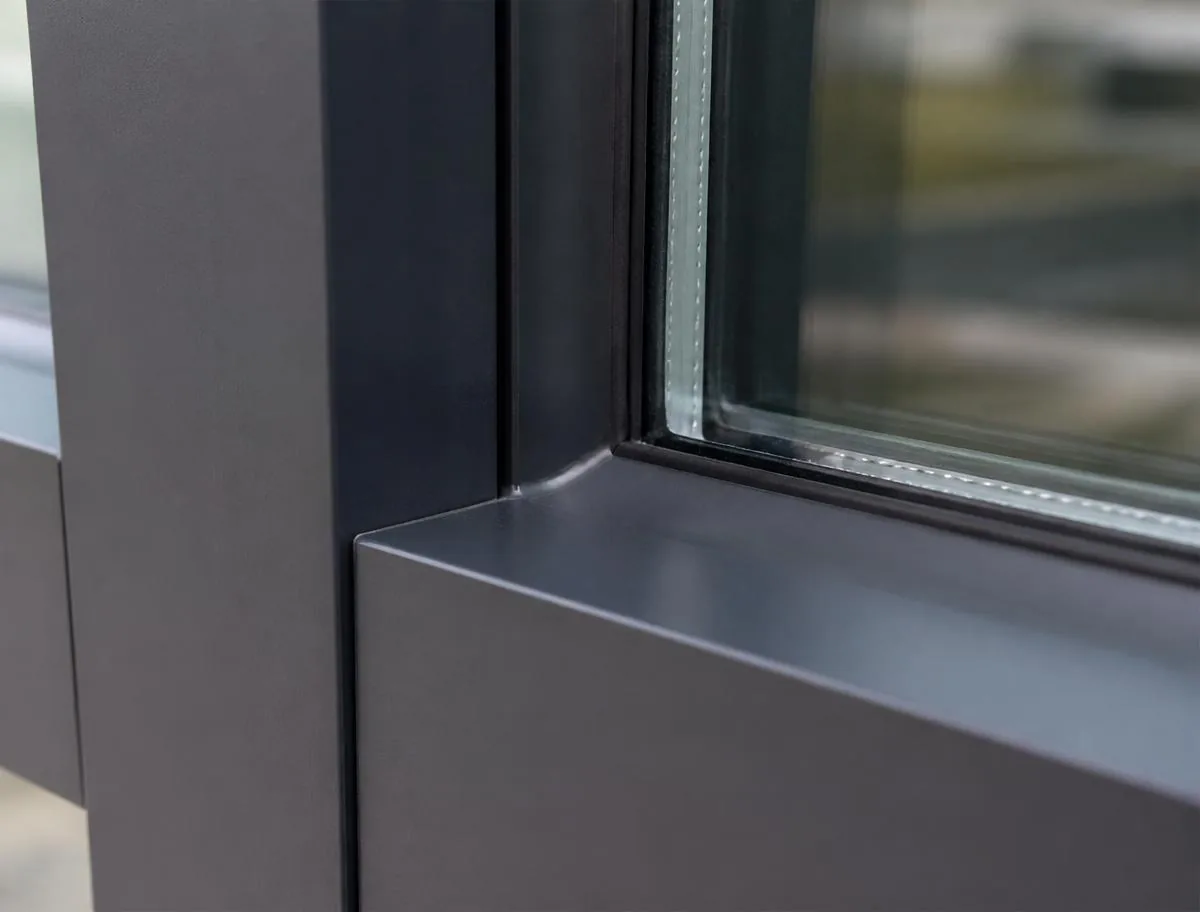
Close-up of a tooled silicone sealant joint between a dark anodized aluminum curtain wall mullion and insulated glass
Joint detail

A sound joint is a designed geometry: correct width-to-depth ratio, closed-cell or open-cell backer rod sized to the opening, two-sided adhesion only, primer where the substrate requires it, and a concave tooled profile that forces the bead into contact with both faces. Beads applied without backer rod, or tooled convex, carry the failure in from day one.

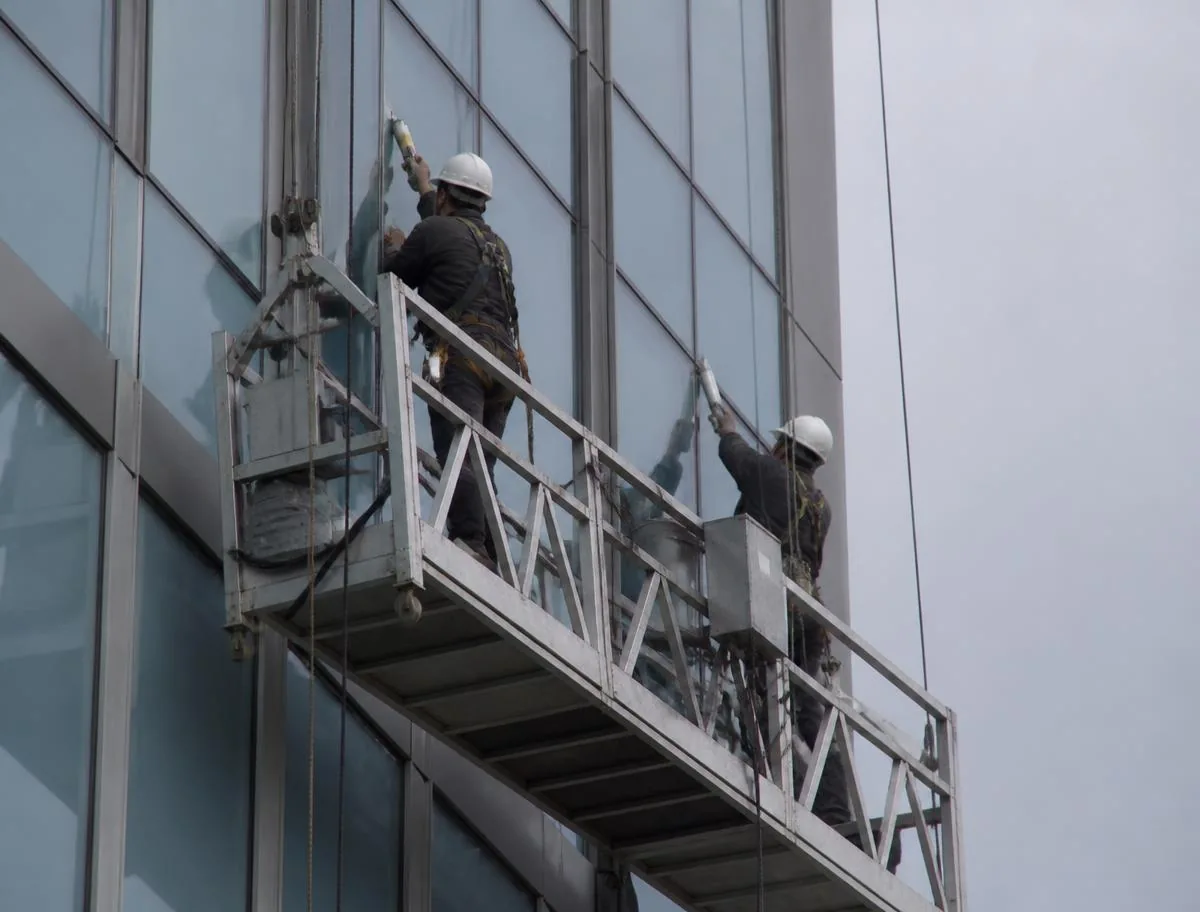
Two workers on a suspended swing stage platform re-caulking vertical joints on a mid-rise glass and aluminum curtain wall
Access

Above the reach of a lift, remediation becomes an access project. Swing stage or rope access, roof anchor verification and load calculation, rigging plans, sidewalk shed or pedestrian protection, and elevation-by-elevation phasing around an occupied building all get scoped and priced as their own line rather than buried in a per-foot number.

Scope

What we scope before a number is issued.

These are the factors reviewed during scope review and field survey. They are the variables behind a budget range and behind whether the work is better suited to a lump-sum or time-and-material proposal — not a price list.

01

Linear footage of joint

The measured total, broken down by joint type: perimeter joints at framing to substrate, expansion and control joints, panel-to-panel joints, glazing and cap-bead joints, and penetration seals. Joint width and depth are recorded with the footage, because a 1-inch joint consumes several times the material of a 3/8-inch joint over the same run.

02

Substrate type and condition

Aluminum, precast and cast-in-place concrete, brick, CMU, EIFS, stone and glass each require a different primer and preparation method, and mixed substrates within one joint dictate the sealant selection. Spalled concrete, open masonry joints and corroded framing are separate remedial items scoped before sealing begins.

03

Access and height

Ground-level and low-rise work runs off lifts or scaffold; mid-rise and high-rise elevations require swing stage, rope access or a mast climber, along with rigging plans, roof anchor verification, sidewalk protection and permits. Access is often the largest single line in a remediation budget and is priced explicitly rather than absorbed.

04

Existing sealant removal

Full removal to sound substrate, mechanical grinding, solvent wipe-down and joint re-sizing all carry labor time. Multiple historical layers, residue from an incompatible product, or an original bead adhered on three sides materially raise the removal effort. Any recommendation to seal over existing material is qualified in writing, not assumed.

05

Occupancy and phasing

Occupied offices, retail frontage, schools and healthcare facilities constrain when work can occur. Night and weekend shifts, tenant notification, pedestrian protection and elevation-by-elevation phasing are set during scope review so the schedule reflects real site conditions rather than an idealized sequence.

06

Testing, warranty and documentation

Field adhesion testing per ASTM C1521, mock-up joints, water testing at representative locations and manufacturer weatherproofing warranties each add defined cost and schedule. Where a warranty is required, the manufacturer's inspection and documentation requirements are built into the scope from the start.
FAQ

Weatherproofing & sealant questions.

How often does commercial sealant need to be replaced?+

A correctly specified and correctly installed high-performance silicone in a properly sized joint commonly performs for 15 to 20 years or more, while urethanes and lower-grade products more often reach 7 to 12 years. Real service life depends on the elevation's UV exposure, how much the joint actually moves, and whether the original installation used primer and backer rod. Rather than working from an age assumption, elevations are surveyed and adhesion tested, and replacement is scheduled where the joints have actually lost performance.

Can sealant remediation be done without recladding or replacing the facade?+

In most cases, yes. Sealant is a maintenance item and is replaceable independently of the glazing systems and cladding it seals. Joints are cut out, the substrate is prepared and primed, and a new bead is installed over new backer rod — with the framing, glass and panels left in place. Recladding only becomes the honest recommendation when the underlying system itself has failed: corroded framing, failed anchorage, widespread IGU seal failure or joints that cannot be re-sized to accommodate the movement the building is producing.

Can new sealant be applied over the existing bead?+

Applying a cap bead over existing sealant is only defensible when the existing material is fully adhered, in sound condition, compatible with the new product and confirmed by adhesion testing. Absent all four conditions, the new bead inherits the failure of the old one and typically debonds within a few seasons. The default and the recommended approach is full removal to sound substrate.

How is the right sealant selected for a building?+

Selection is driven by the substrates being joined, the calculated joint movement, exposure, whether the joint is structural or weatherseal, and any compatibility limits with existing glazing materials. Silicones dominate on aluminum and glass for movement capability and UV stability; urethanes are used where paintability or abrasion resistance matters. On remediation work, compatibility and adhesion testing on the actual substrates confirm the selection before the full order is placed.

Does weather affect when sealant work can be performed?+

Yes. Substrates must be dry, clean and above the manufacturer's minimum application temperature, and joints must not be sealed while ice or condensation is present. New Jersey winters routinely produce days that are unworkable for exterior sealant, so schedules for cold-season remediation include weather contingency, and in some cases the work is phased to warmer months rather than risk a compromised bond.

What is included in a sealant condition survey?+

A survey documents joint locations, widths and substrates by elevation, records observed failure modes such as cohesive splits, adhesive peel, chalking or missing backer rod, and where access allows includes hand-pull adhesion tests at representative joints. The result is a quantified linear-footage takeoff by condition, which is what a defensible budget range or lump-sum proposal is built on.

Next step

Send elevations or a joint survey for review.

Elevations, a sealant condition survey, photos of failing joints or a written scope description. Reviewed and answered with next steps.